In recent years, global events have increasingly left people feeling confused rather than informed. Governments take firm public positions, then appear to delay action. They use strong moral language, yet behave in ways that seem cautious, inconsistent, or even contradictory. Periods of silence are followed by sudden decisions that few saw coming.
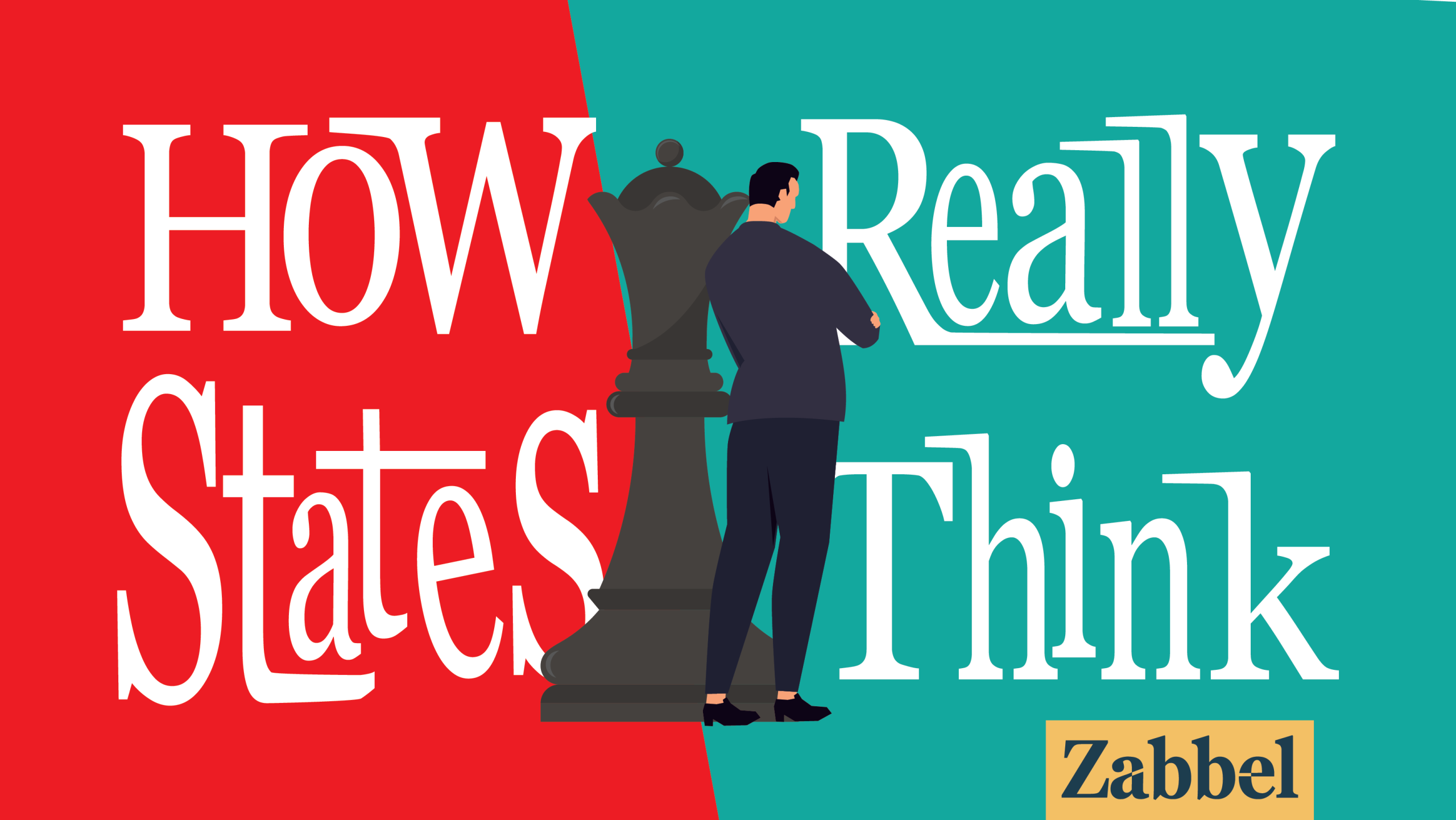
This pattern is often interpreted as hypocrisy or indecision. But in most cases, it reflects something deeper: a fundamental misunderstanding of how states actually think and make decisions.
Understanding this logic does not require agreeing with government actions. It requires recognizing that states do not operate like individuals.
Decisions Are Processes, Not Moments
At an individual level, decisions are often imagined as single moments: a choice is made, followed by action. At the state level, decisions are rarely so clear-cut. They are better understood as evolving positions.
Government decisions develop over time through internal debate, institutional constraints, domestic politics, international pressure, media narratives, electoral cycles, and timing. What appears externally as hesitation or delay is often a process of recalibration as conditions change.
This is why a government may hold a position for years before acting on it. The position itself may not have shifted, but the surrounding circumstances have. Action becomes possible — or necessary — only when conditions align.
States Do Not Think Like Individuals
A common mistake in interpreting global events is projection. People often expect governments to respond emotionally or morally in the same way individuals do. States, however, operate under a different logic.
Rather than asking whether something is right or wrong in isolation, states assess what a decision will cost, what it will change, and what it will enable in the future. Values do not disappear in this process, but they are constantly weighed against consequences.
In practice, governments are always balancing values and interests simultaneously. What changes over time is not belief, but priority. From the outside, this can look like inconsistency. From the inside, it is often a rational adjustment to shifting constraints.
Timing Is a Strategic Choice
Timing plays a central role in state decision-making. Acting too quickly can lock a government into consequences that are difficult or impossible to reverse. Waiting, therefore, is not necessarily a sign of weakness or indecision.
In crisis situations especially, decisions are made under stress, incomplete information, and pressure from multiple directions. Sometimes a choice is made not because it is ideal, but because not deciding would be worse. In other cases, restraint is the safer option.
Delay is often misunderstood as inaction. In reality, it can be a deliberate effort to avoid decisions driven by emotion, momentum, or public pressure — forces that tend to produce poor outcomes in complex systems.
Public Language and Internal Discussion Are Not the Same
Much of the confusion surrounding state behavior stems from how governments communicate. Public statements are typically calm, measured, and deliberately vague. Their purpose is not to explain every detail, but to reassure, avoid panic, and preserve flexibility.
Public language must address multiple audiences at once: citizens, political opponents, allies, markets, and sometimes adversaries. Every word is chosen with potential consequences in mind.
As Jennifer Upton, explained from her experience inside government:
“Silence doesn’t usually mean nothing is happening. It often means something sensitive is underway that can’t be discussed publicly yet.”
Behind closed doors, conversations are very different. Internal discussions are candid, uncertain, and focused on risk. Officials debate worst-case scenarios, unintended consequences, and what is still unknown. The goal is not reassurance, but reducing blind spots before anything becomes public.
Public language calms.
Internal discussion questions.
Recognizing this distinction makes government communication far less mysterious than it often appears.
Silence Is Often a Signal, Not an Absence
Silence is one of the most misinterpreted aspects of state behavior. Not speaking can preserve negotiation space, prevent escalation, allow others to adjust their positions, or avoid committing to a stance too early.
Sometimes, saying less is the most responsible option available. Silence does not necessarily indicate inaction; it often reflects sensitivity, caution, or ongoing diplomatic engagement behind the scenes.
Why These Patterns Repeat Across Countries
These behaviors repeat across different countries and political systems not because governments are identical, but because they face similar constraints. Electoral pressure, media scrutiny, economic limits, alliance politics, and imperfect information shape decision-making everywhere.
Even when decisions are heavily influenced by a single leader, these structural pressures do not disappear. They are simply filtered more strongly through one individual’s worldview and incentives.
Different contexts. Different systems. Similar underlying logic.
Understanding Is Not Agreement
Understanding how states think does not mean defending their actions or agreeing with outcomes. It means interpreting global events more clearly.
When governments are no longer expected to think like individuals, delays feel less like betrayal, silence feels less like negligence, and sudden actions feel less arbitrary. States do not suddenly abandon their values; they adjust what they can afford to act on.
Understanding does not equal endorsement.
It simply replaces confusion with clarity.
And once that shift happens, the world becomes easier to read.
Check The Video Now!
Credits
Perspective & experience: Jennifer Upton, former British diplomat
Research assistance: Kit Center
Illustrations: UO Design
Follow us on our social:
LinkedIn | Facebook | Instagram | YouTube